How you can help!
Scleroderma
Learn about Adriana's condition
-
It is estimated that about 300,000 Americans have Scleroderma. 80% being women.
-
Females are 4 times more likely to develop Scleroderma.
-
Scleroderma can affect Native Americans and African Americans more severely than Caucasians.
-
Most patients are between the ages of 30-50 when diagnosed.
-
Thanks to recent advances in research and treatment, scleroderma patients now can expect to live longer and more productive lives- with increased hope for the future. A cure for scleroderma, however, remains elusive.
In this video, listen to Andras Fazakas from the Nordic Health Organization, explain the basics of Systemic sclerosis (scleroderma).
How Scleroderma Effects the Body
SKIN
The first clinical symptom to suggest a diagnosis of scleroderma is skin thickening that begins as swelling or “puffiness” of the fingers, hands, and face. Later the skin becomes hard, shiny, and leathery. These areas of hardness are widespread and typically appear on both sides of the body. Eventually, tissue loss occurs and the skin becomes more highly colored.
KIDNEYS
Scleroderma patients have a higher risk of kidney disease (also known as scleroderma renal crisis). Evidence shows that the renal blood vessels may suddenly constrict (known as the Raynaud’s phenomenon of the kidney). This condition often appears as new systemic hypertension which may be asymptomatic.
LUNGS & HEART
During the disease process and progression, the blood vessels and lung tissue may be affected. When blood pressure inside the lung's blood vessels increases, this is considered Pulmonary hypertension. This causes the right side if the heart to pump harder in order to move blood into the lungs for oxygen. This can lead to failure of the right side of the heart. The lung tissue may also show significant scarring (fibrosis).
GASTROINTESTINAL TRACT
The involuntary muscle of the GI tract (smooth muscle) can be affected in patients with scleroderma. This will cause an abnormal motor function of the small or large bowel, stomach, and esophagus. Therefore, the patient may experience the following symptoms: difficulty swallowing, food being trapped in the throat, heartburn, acid reflex, delayed emptying/early stomach filling, diarrhea, and constipation.
EYES AND MOUTH
Scleroderma patients may experience tightening of the skin over the face. The opening of the mouth may be decreased in size, making lip and mouth movements as well as oral hygiene difficult. This may lead to jaw pain and gum disease.
Patients will also develop Sjogren's Syndrome, secondary to Scleroderma. This is also an autoimmune disease which is a malfunction of the tear and saliva producing glands. The unusual dryness of the eyes resulting from this condition can lead to serious eye inflammation and irritation. The dysfunction in the salivary glands will cause dry mouth.

Adriana had been diagnosed with Iron Deficiency Anemia and has since completed 3 rounds of Iron Infusions! The treatments were successful and she is no longer considered anemic!
Adriana was diagnosed with Gastric Antral Vascular Ectasia; otherwise known as GAVE Syndrome. This is an uncommon cause of chronic gastrointestinal bleeding or iron deficiency anemia.
JOINTS AND MUSCLES
Musculoskeletal pain is common in rheumatic diseases, such as scleroderma . Physical examination may detect arthritis but muscle disease may be asymptomatic until weakness occurs.
RAYNUAD'S PHENOMENOM
The condition can cause pain within the affected extremities, discoloration (paleness), and sensations of cold and numbness. Cold intolerance and Raynaud’s phenomenon are seen in most scleroderma patients.
Winter months tend to worsen these symptoms and complications such as finger ulcers are more likely to appear. When exposed to cold temperatures, the blood supply to the fingers, toes, nose and/or earlobes, are greatly reduced; the skin turns pale or white and becomes cold and numb.
CONSTITUTIONAL
Constitutional symptoms such as low energy and fatigue are common. Patients may also find it difficult to sleep normally since rest is often disrupted by pain, depression, fear of the illness, skin itching and/or specific internal organ dysfunction (e.g., shortness of breath from heart or lung failure or heartburn from gastrointestinal reflux).
Also, note that the lack of sleep amplifies considerably the symptoms during the daytime (like diffuse soft tissue pain and fatigue).
PYSCHOLOGICAL
Scleroderma is associated with some mood disorders (depression), altered self-image and sexual dysfunction. Patients may hide some of these symptoms because of embarrassment or the fear of appearing psychiatrically ill or discovering an emotional illness.
Acknowledging the physical, social and emotional toll scleroderma takes, as well as adapting to their new needs, is crucial in order to improve the quality of life.
Hematopoietic Stem Cell Transplantation
What Is HSCT?
HSCT (Hematopoietic Stem Cell Transplantation) was first used as a treatment for some types of cancer but is now widely used as a therapy for various autoimmune diseases, including Scleroderma.
HSCT attempts to “reboot” the immune system, which is responsible for the disease. In HSCT, hematopoietic (blood cell-producing) stem cells, which are derived from a person’s own bone marrow or blood, are collected and stored, prior to depleting much of the immune system using chemotherapy drugs. Then the stored hematopoietic stem cells are reintroduced to the body. The new stem cells migrate to the bone marrow and over time reconstitute the immune system.
What is involved in the HSCT procedure?
1. A person undergoing HSCT is given some form of chemotherapy, usually by infusion in the vein, for up to 10 days (Adriana will be an outpatient) to stimulate the production of bone marrow stem cells and promote their release into the blood. Then some blood is drawn from a vein and the stem cells in the blood are stored for later use.
2. Then the individual is usually hospitalized, and given a powerful mix of chemotherapies for up to 11 days to kill or suppress immune cells throughout the body.
3. The stored stem cells are then infused into the bloodstream through a vein.
4. The individual is usually given medicines such as antibiotics to help combat infection.
5. The person remains in the hospital for an additional period of time while the immune system begins to rebuild itself. It is estimated that Adriana will remain in isolation for at least 2 weeks. Sometimes individuals are discharged from the hospital in two to four weeks, but this can be longer. In a recently published study, the hospital stay after transplantation lasted 10 to 160 days, depending on any side effects experienced. It is unknown as to how Adriana's body will respond to treatment.
6. The immune system gradually rebuilds itself within 3 to 6 months.
-
Stem cell transplants are approved to treat various cancers and auto-immune diseases.
-
The goal of HSCT is to reset the immune system and stop the inflammation that contributes to Scleroderma.
-
The stem cells are transplanted after chemotherapy drugs are administered to help build a new, and hopefully healthy, immune system.
-
An extremely high success rate has been claimed for this treatment, but it is still regarded as experimental.

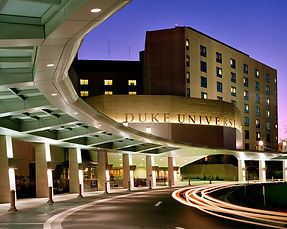
Why Duke University Hospital?
Duke University Hospital in North Carolina is one of the few centers in the U.S. using stem cell transplantation as part of treatment for scleroderma. Duke rheumatology ranks among the nation's best for the evaluation and treatment of such inflammatory and immune diseases. Because inflammatory and immune disorders can affect many systems in the body, their doctors partner with specialists such as cardiologists, orthopaedists, dermatologists, radiologists, and physical therapists to provide appropriate, comprehensive care.
Adriana has been approved as a candidate for the HSCT treatment at Duke! Only a handful of scleroderma patients are accepted into their treatment program. And only those who have been diagnosed within the past 2 years with the systemic form of scleroderma meet criteria. Due to the extensive treatment, Adriana will have to temporarily re-locate to North Carolina for the duration of care and recovery. She is expected to reside in NC for up to 3 months.
Adriana's HSCT treatments had been post-poned to start in mid April due to the discovery of Adriana having GAVE Syndrome. Treatment was then post-poned again due to the Covid19 pandemic . The Stem Cell Transplant was then scheduled for July 27, 2020.